–
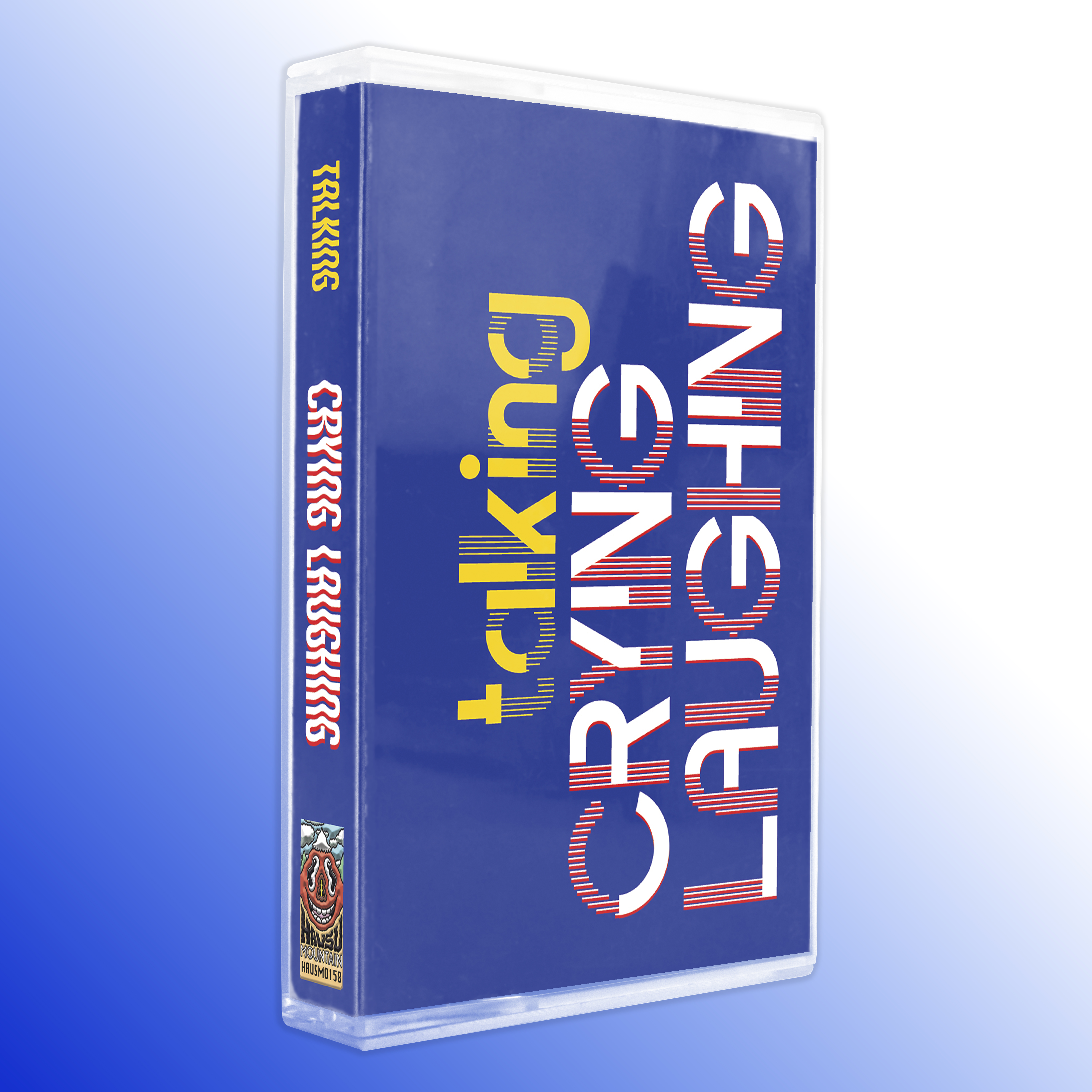
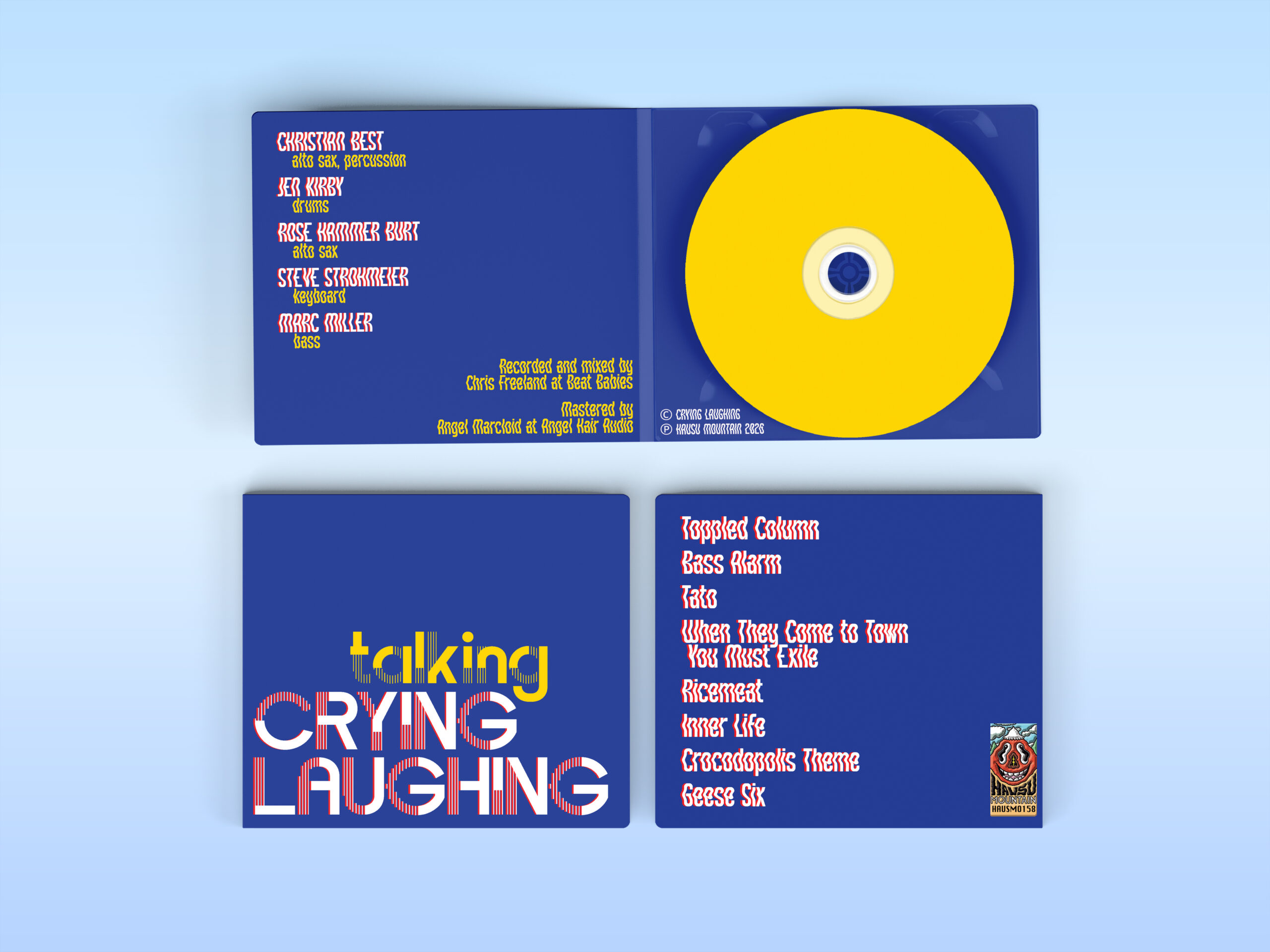
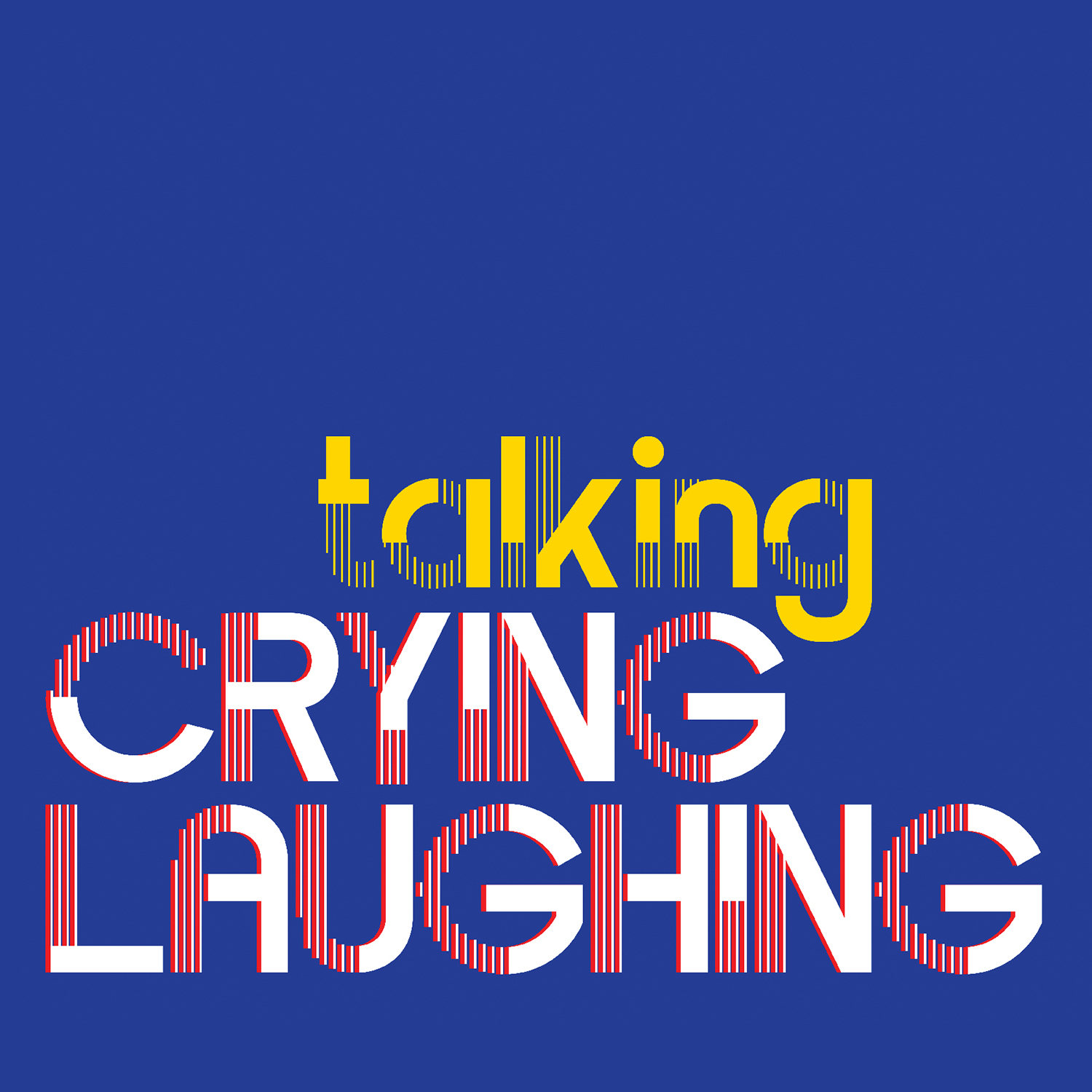
To be released on Tape and CD on September 10th, 2026. C30 – red and white split cassette with black imprints packaged with a 2-sided 4-panel J-Card. CD packaged in 4-panel gatefold digipak. This is the catalog page with album information and artwork. To purchase, head to our Bandcamp page.
–
–
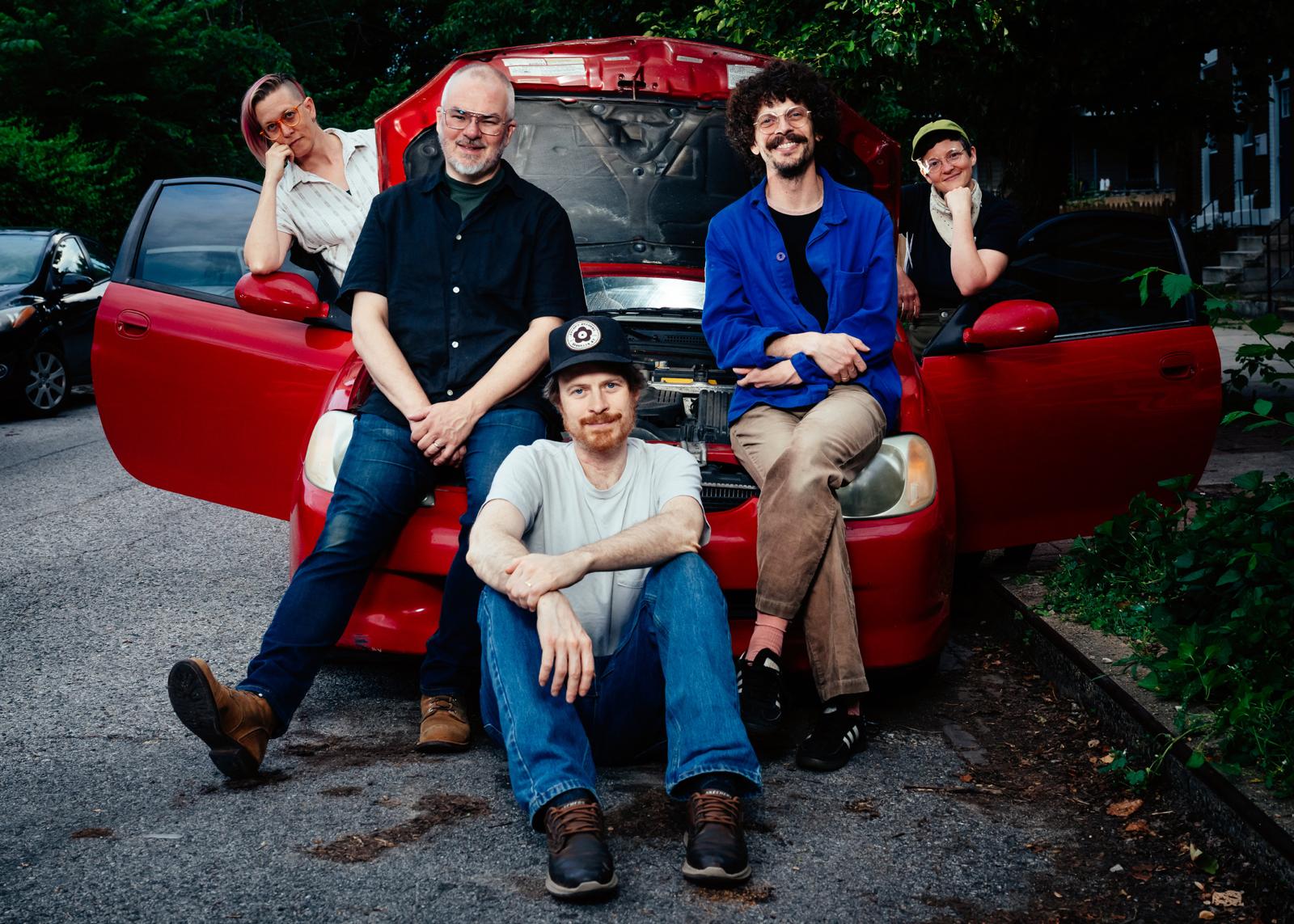
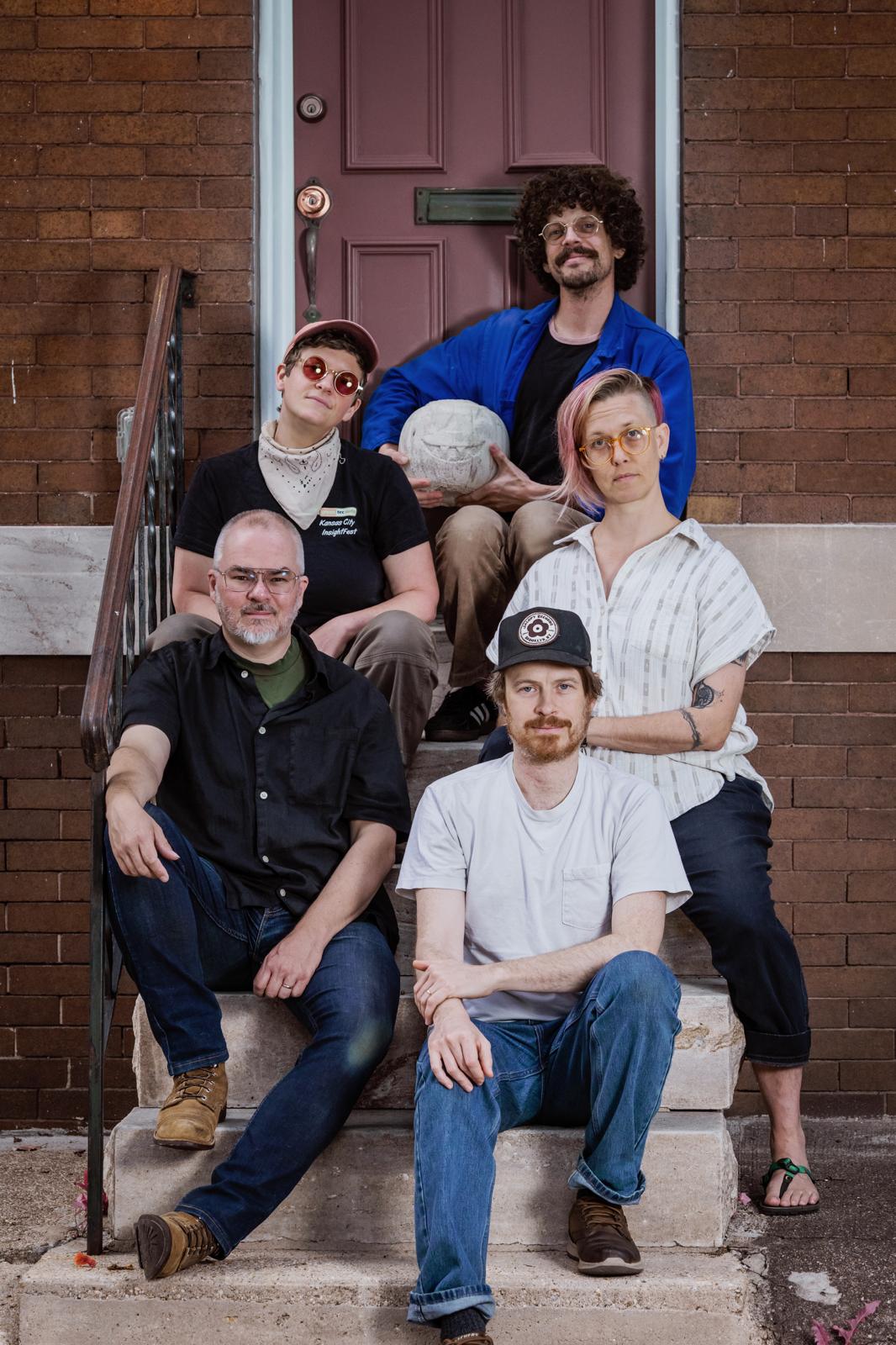
Baltimore-based quintet Crying Laughing joins the Hausu Mountain family with the release of their debut album Talking. The lineup of longtime participants in Baltimore’s vibrant experimental underground got together in 2024 with a clear vision for their new band: a fusion of saxophone-led polymetric composition in the Reich/Glass/Riley school of minimalism with the energy and groove of post-punk and the rhythmic sensibilities of Moondog’s street recordings; head music as much as body music. Saxophonist Christian Best’s and drummer Jen Kirby’s collaboration in the band Smoke Bellow (who released LPs on labels like Trouble in Mind and Moon Glyph before ending in 2024) formed the nucleus of Crying Laughing. Steve Strohmeier plays keyboards, and has toured or recorded with a slew of Baltimore luminaries including Beach House, Dan Deacon, Daniel Higgs, and Lower Dens. Bassist Marc Miller formed the math-punk band OXES in 1998 and the ever-shifting experimental ensemble Microkingdom in 2006. Saxophonist Rose Hammer Burt participates in Baltimore musical collectives that orbit the legendary experimental venue The Red Room and its associated improvised music festival High Zero. With the freewheeling nature of the band members’ omnivorous menu of projects in mind, the laser focus of Crying Laughing’s music, with its meticulously juxtaposed dual saxophone leads and lock-groove rhythm section, might initially come as a surprise. Contrary to many bands who start off struggling to clarify a sound or find time to play together for the many hours required to gel, Crying Laughing exploit the fact that they all live within walking distance of each other in Baltimore to woodshed their ideas until they crystallize into pored-over final forms. Though Talking highlights precise arrangements and tight transitions ironed out through endless rehearsals, aligning more closely with the songwriting and performance strategies of a new music ensemble instead of a traditional “rock band,” the album’s live-in-the-studio takes sidestep academic pomposity and seek out the surreal and supercharged potential of a group of close friends playing their handmade music in a room together.
Christian Best’s and Rose Hammer Burt’s swooning tandem sax melodies trace atypical scales and burst with dramatic motifs that wouldn’t sound out of place on an early-70s Pharoah Sanders record. The two saxes take on a role akin to vocalists, often trading momentary bursts in hocketing phrases or jittering together through short recursive leads until one of them launches into a solo that cascades over the band in ecstatic curlicues. Jen Kirby describes her atypical drumming style as “a response to the people I’m playing with and my natural technical limitations due to total hackery of technique,” yet that self-taught idiosyncrasy charges Talking with the key confluence of robotic exactitude and post-punk mania that any situation requires. Kirby’s performances on a modified kit with a tiny snare and rototoms with distinctly tuned pitches place her drums in a particular mid-to-upper register in the mix – creating ambiguous near-melodies in the rhythms akin to Moondog’s street recordings with his amalgam of strikable objects. The drum patterns she latches into leave plenty of space to fill in for her band members, who frequently join the grid with auxiliary percussion parts of their own. Marc Miller is all restraint, deploying his bass surges in the perfect gaps in Crying Laughing’s criss-crossing arrangements to maintain the groove. When he takes the lead role with a galloping bassline, we hear every fine-grain detail of his low end tone as he prods his comrades up into higher peaks of intensity. Threading between the two polarities of the saxophones and the rhythm section, Steve Strohmeier’s sampled keyboard instruments color in the open space with lush harmonies and walls of texture. His harmonium imbues their music with moments of reverence, discovering meditative near-ambient oases within tumultuous surroundings, while his clattered piano and ping-ponging marimba lines take the opposite tactic by stacking even more layers onto the busy rhythms.
Crying Laughing recorded Talking in one day in a basement studio outside of Baltimore, tracking each take as a live performance into a network of strategically placed microphones and quasi-isolation booths devised by engineer Chris Freeland. The “live in the basement” approach of that day’s sessions gives the album a fly-on-the-wall viewpoint into what one of the band’s weekly rehearsals might sound like – when they reach the point when they’ve finished workshopping any given song and they agree, “OK, we can call that one done.” While Talking shifts from tight polymetric lattices of melody to headbobbing groove passages to broader landscapes of moody and melted harmonies, every atmosphere reflects Crying Laughing’s collaborative compositional mindset. As saxophonist Christian Best explains: “Each song begins its life as a seed of an idea: a whole arrangement, specific rhythms, melodies, or sometimes just a theory of interaction. The band then collaboratively expands and later condenses those ideas down into their most concise form. Compositionally we aim to not encroach on each instrument’s space. All of us contribute to the overall rhythm and melody of each piece, trading roles and interweaving with each other.” With the live takes captured on Talking as a testament, Crying Laughing has already achieved a collective melding of minds and hands in their relatively short existence as a band – one that can only deepen into who-knows-what forms as they keep exploring sound together.
—
—